State Diagrams 7, Time-outs
Timeouts are a very versatile tool for fault detection in control systems. In a majority of cases where an
external response is expected as a result of some output from the controller, a timeout can be effective
in detecting a problem.
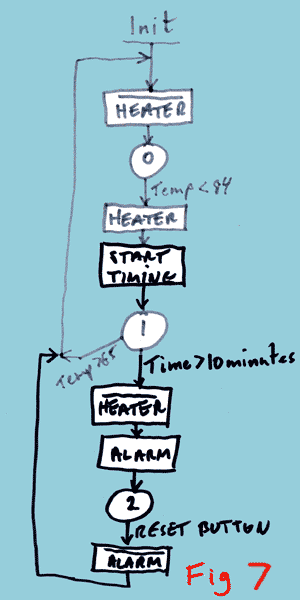
In Figure 7 I have added an alarm function. Can you work out what it does?
When you have made an honest attempt to work it out, check your thoughts
here:  (You will learn 10x as much by working it out for yourself)
The alarm function uses timing to detect if the tank is failing to heat up.
The state diagram assumes something is wrong if the temperature does not
read >85°C after 10 minutes of applying heat. If the time limit comes and goes
without the expected result (hot tank) the program will turn on an alarm and
turn off the heater output.
The actual cause of the problem might be a faulty heater, a faulty heater
relay or a faulty temperature sensor. This fault detection method is called
a timeout. Once the timeout has "tripped" and the alarm has been turned on,
the program will wait in state 2 until a user presses an alarm reset button.